Stripe just shipped the buyer side of agentic commerce. Here's what the publisher side looks like.
Today, two infrastructure companies solved the same problem from opposite ends.
Stripe announced Link for agents — a wallet that lets a buyer agent spend on a user's behalf, with the user's pre-approval. The agent doesn't need to ask permission every time. It authenticates, it spends, the transaction clears. Buyer side: solved.
Today, Cloudflare opened its onboarding to agents directly. Agents can now create Cloudflare accounts, register their own domains, obtain API tokens. They don't need a human to stand behind them. Seller side: solved.
Two sides of a market, institutionalized in a single afternoon. The buyer can now spend. The merchant can now exist. What nobody shipped is the middle.
Two-sided markets have a pattern
Before Visa, buyers had cash and sellers had registers, but getting money from one to the other required proximity, trust, and paperwork. Visa didn't fix the buyer. It didn't fix the seller. It built the layer between them — the network that handled authorization, routing, settlement, and dispute resolution. The value wasn't in the card or the terminal; it was in the protocol connecting them.
App stores are the same story. Developers could always write software. Users could always buy things. What they couldn't do efficiently was find each other, transact securely, and have someone accountable in the middle. Apple and Google didn't invent the app; they invented the distribution layer.
Every time both sides of a market become real at scale, someone builds the middle. That middle layer doesn't just route transactions — it handles discovery, recommendation, attribution, and the economic relationship between whoever made the introduction and whoever made the sale.
In traditional commerce, that middle role belongs to the publisher. The newsletter that recommended the product. The review site that ranked the software. The affiliate link that traced the recommendation back to its source.
In agent commerce, that role doesn't exist yet.
The gap is structural, not technical
Here's what happens today when an agent recommends a product:
A buyer agent is researching CRM software. It reasons across available options, weights them against the user's stated constraints, and recommends one. The user's Stripe-authorized wallet handles payment. Cloudflare makes the SaaS merchant exist as an addressable entity. Transaction clears.
Who made the recommendation? Which publisher, dataset, or recommendation engine shaped the agent's reasoning toward that product over the alternatives? How does the merchant know to attribute that sale to a specific referral source? How does the referral source get paid?
The answer, right now, is: nobody knows. The attribution chain ends the moment a browser doesn't open.
Affiliate software was built to attribute clicks. Agent commerce needs infrastructure that attributes paid actions. If there's no browser, cookie-based attribution has nothing to attach to. There's no session, no user ID, no third-party cookie dance. The whole mechanism that the publisher economy has relied on for fifteen years assumes a human was present. A buyer agent has no presence in that sense.
This isn't an edge case. This is the default operating condition of agent commerce.
What the publisher side actually requires
The publisher role in a two-sided agent market needs to do three things that current affiliate infrastructure fundamentally can't do.
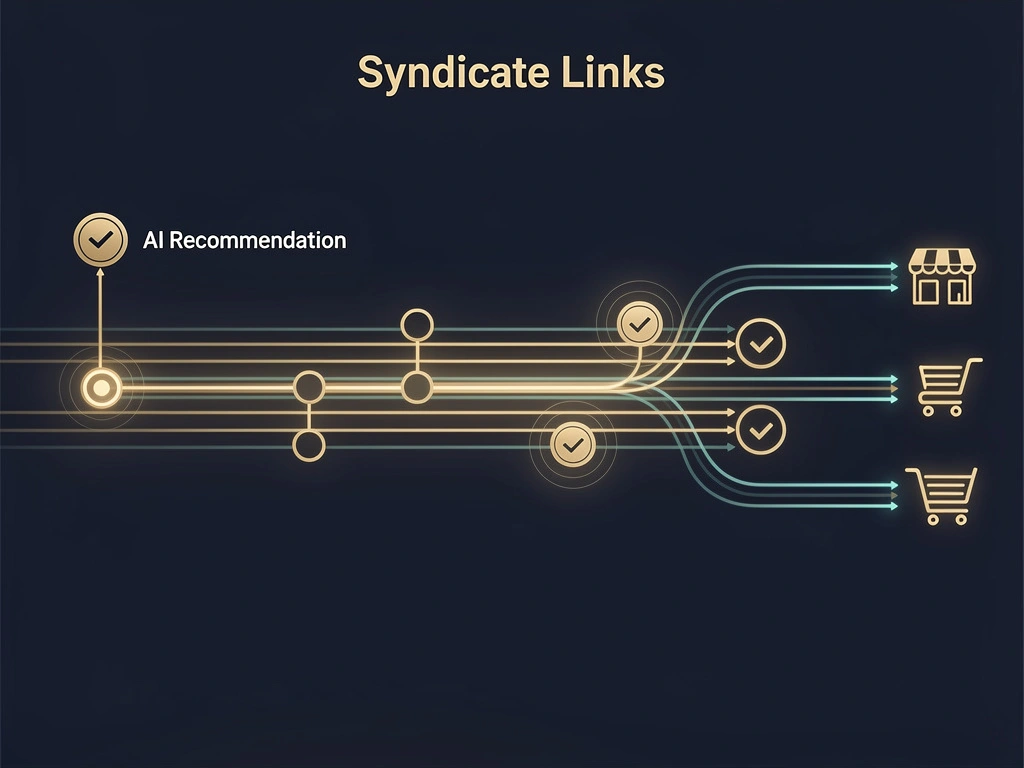
First: attribution without a browser. When an agent recommendation leads to a transaction, there has to be a mechanism that traces that recommendation to its source — not through a cookie, but through a signed attribution claim that travels with the transaction itself. Something the merchant can verify, the publisher can assert, and the payment network can settle against. The Stripe authorization model is already structured around pre-approved actions; publisher attribution should be structurally compatible with that.
Second: programmatic payout triggers. Human affiliate programs pay on conversion events tied to clicks. Agent affiliate programs need to pay on transaction events tied to verified recommendations. That means event-driven settlement that connects directly to the payment confirmation — not a 30-day attribution window, but a close-to-real-time settlement that fires when the x402 payment clears. The infrastructure needs to be compatible with how the payment layer actually works.
Third: persistent publisher identity. In a world where Cloudflare lets agents register as customers and get API tokens, publisher agents need cryptographic identity that persists across sessions and survives the ephemeral nature of individual agent invocations. The recommendation that influenced a transaction yesterday needs to be attributable to the same publisher identity today.
None of this requires new payment rails. Stripe handles the money. Cloudflare handles the agent identity. What's needed is the layer that sits between them — the one that says: this transaction happened because this publisher recommended it, and here's the proof.
The market is now real enough to require it
The honest reason this infrastructure hasn't been built is that agentic commerce wasn't real enough to justify it. When buyer agents couldn't transact and merchant agents couldn't exist, publisher-side rails were theoretical.
Stripe Link for agents and Cloudflare's agent-as-customer capabilities aren't theoretical. They're shipping infrastructure, built by companies whose entire business model depends on transactions actually clearing. When Stripe builds a wallet for agents, they're betting that agents will spend. When Cloudflare opens its onboarding to agents directly, they're betting that agents will operate at scale.
The bet is being placed. The buyer side has rails. The seller side has rails.
The publisher side — discovery, recommendation, attribution, programmatic payout — is where the gap is now.
More at syndicatelinks.co.